Chamath Palihapitiya Warns AI Could Crack Bitcoin as Leaders Push Back
英文原文查看译文
阅读字号阅读正文 ↓
加载图片中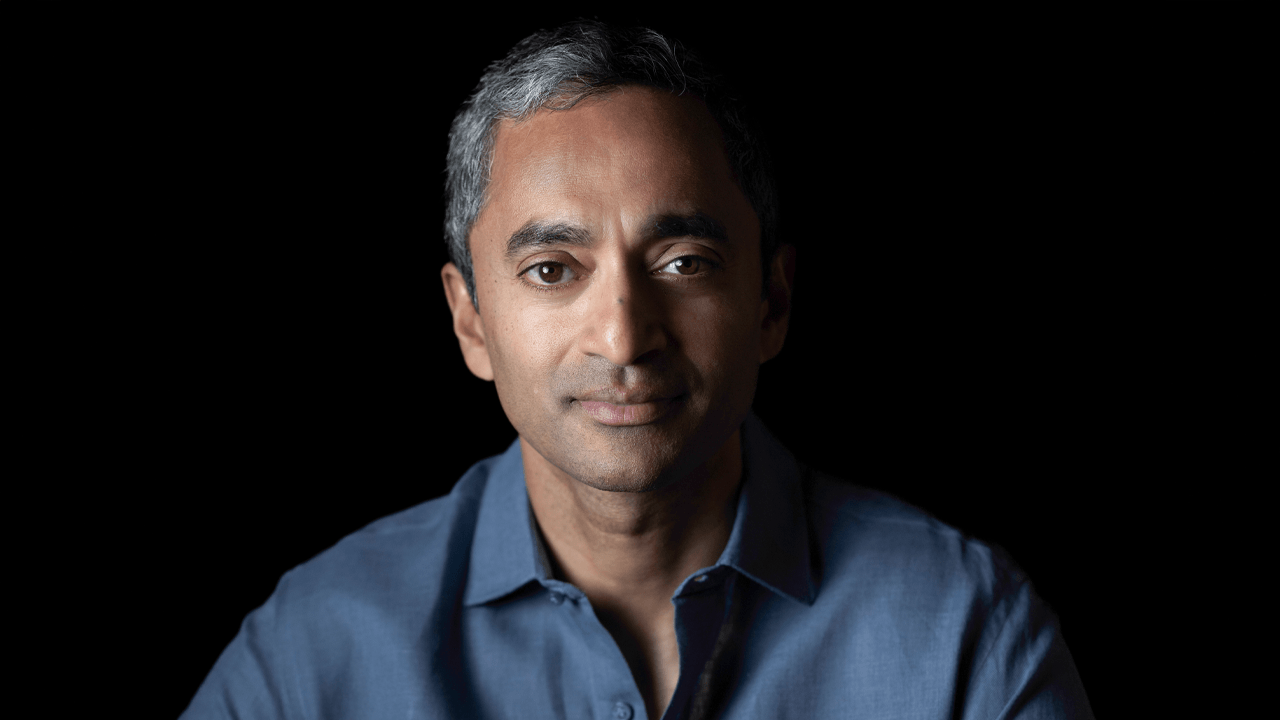
Chamath Palihapitiya warns AI could break Bitcoin's cryptography, drawing sharp rebuttals from industry leaders.
Key Takeaways
• Chamath Palihapitiya argues AI could dramatically accelerate the discovery of mathematical techniques that compromise modern cryptography.
• Strategy founder Michael Saylor and Blockstream’s Adam Back disputed the investor’s thesis on Nov. 27.
• Stacks co-founder Muneeb Ali challenged Palihapitiya’s assumptions about Bitcoin’s capacity to implement future-proof cryptographic upgrades.
Chamath Questions Bitcoin’s Survival in the Age of Superintelligence
In an essay published Nov. 27 titled “Will Bitcoin inevitably go to zero?” Palihapitiya expanded on arguments he made approximately a month earlier during an appearance on the Moonshots podcast, where he questioned the leading digital asset’s long-term valuation potential amid advances in artificial intelligence (AI).
The Social Capital founder said the ensuing controversy prompted his team to examine the mathematical assumptions behind his position, consult experts, and prepare a more comprehensive explanation for subscribers. “Nothing on the internet is truly 100% secure,” Palihapitiya wrote. “A digital system is considered ‘secure’ simply because the fastest method anyone knows for breaking into the system would take an impractically long time to complete.”
The billionaire’s central argument concerns the potentially diminishing interval between the establishment of cryptographic security assumptions and the discovery of mathematical techniques capable of invalidating them. “But new mathematics, uncovered by rapidly unearthing the mathematics beneath a problem, could reveal novel methods that cut the work needed to break a lock by many orders of magnitude,” Palihapitiya explained, adding:
“And suddenly the impractical could become practical.”
When Mathematical Impossibilities Become Computational Realities
Palihapitiya revisited the history of RSA cryptography, introduced in 1977, to illustrate how dramatically mathematical discoveries can alter security expectations. According to the investor, one of RSA’s inventors initially estimated that factoring a 125-digit number would require 40 quadrillion years. By 1994, volunteers had factored a larger, 129-digit number in eight months through improved algorithms and greater computational resources.
Bitcoin’s digital signatures rely on elliptic-curve cryptography rather than integer factorization, meaning breakthroughs against RSA do not automatically translate into vulnerabilities affecting Bitcoin. Nevertheless, Palihapitiya believes AI could accelerate mathematical discovery beyond conventional expectations, describing the emerging era as follows:
“This is a period of alien mathematics, not necessarily because the proofs are long, but because they contain so many ideas no one expected.”
The investor cited mathematician Levent Alpöge’s collaboration with Anthropic’s Claude on a proposed proof of the Riemann hypothesis, a famous mathematical conjecture dating to 1859. Independent organizations have computationally verified the proposed proof, although broader academic scrutiny remains ongoing. The achievement itself does not establish a cryptographic vulnerability.
Palihapitiya additionally referenced Anthropic’s July 2026 disclosure that Claude Mythos Preview discovered a computational attack against a reduced, seven-round version of AES-128 that operated 200 to 800 times faster than the previous best method. The experiment did not compromise the complete 10-round cipher or establish an attack against Bitcoin.
Bitcoin’s Cryptographic Architecture Comes Under Scrutiny
Palihapitiya acknowledged Bitcoin’s ingenious combination of existing cryptographic primitives, economic incentives and decentralized ledger maintenance. “First, Bitcoin didn’t introduce a new kind of cryptographic lock,” the investor observed. Bitcoin incorporates the SHA-256 hash function, elliptic-curve digital signatures and a proof-of-work consensus mechanism.
Its security encompasses several distinct mathematical and economic components rather than one isolated cryptographic algorithm. “The genius of Bitcoin was the clever arrangement of the locks,” Palihapitiya explained. His concern, however, centers on Bitcoin’s dependence on independently enforced mathematical rules and whether its decentralized participants could coordinate defensive upgrades before a sufficiently powerful attack materialized.
During his October podcast appearance, Palihapitiya disclosed that he had shifted his direct bitcoin exposure into equity through Digital Currency Group years earlier, citing storage and security concerns.
Saylor, Adam Back and Other Bitcoin Advocates Fire Back
Stacks co-founder and distributed systems researcher Muneeb Ali challenged Palihapitiya’s assessment of Bitcoin’s upgrade capabilities. “Chamath, would you change your mind on this if I present new information?” Ali asked, elaborating:
“Specifically, new information that shows you’re underestimating how quickly Bitcoin can ship upgrades and pushing future-proof cryptography is easily achievable.”
Ali disclosed that his team had been privately working on the subject. Moreover, Strategy founder Michael Saylor approached the argument from an economic and philosophical perspective, distinguishing Bitcoin as a monetary protocol from its particular software implementation.
“This thesis rests on a logical fallacy,” Saylor remarked on Friday. The Strategy founder continued:
“Bitcoin isn’t software. It’s an economic protocol like Arabic numerals, sexagesimal time, the metric system, and English. If AI breaks encryption, all digital commerce is at risk. The solution is an upgrade to next generation encryption.”
Blockstream CEO and Hashcash inventor Adam Back offered a considerably shorter dismissal of Palihapitiya’s mathematical suppositions. “Generic speculation. P!=NP, EC unaffected, RSA unaffected. AI is not magic,” Back stated. Notably, P versus NP remains an unresolved mathematical problem, and proving that P does not equal NP would not independently guarantee the security of specific cryptographic algorithms.

Market analyst Bob Loukas dismisses Chamath Palihapitiya’s AI-related warning in a Nov. 27 post on X.
Bitcoin Investment Group CEO Eric Weiss took a more personal approach, questioning Palihapitiya’s investment history and decision to place portions of his research behind a subscription. “Maybe if you hadn’t sold all of your FB on the IPO and all your BTC too early as well you wouldn’t have to put your little article behind a paywall,” Weiss wrote.
Meanwhile, Strive CEO Matt Cole challenged the apparent binary nature of Palihapitiya’s investment thesis. “The main argument appears to be Bitcoin won’t be able to upgrade quick enough, and will thus go to zero,” Cole said, adding:
“If proven wrong, that must then mean the opposite is true, and bitcoin goes to infinity.”
With bitcoin trading near $60,000 Friday, the controversy exposed a fundamental distinction between mathematical discovery and deployable cryptographic attacks. AI may accelerate both offensive research and defensive engineering, but Bitcoin’s demise remains a hypothetical outcome rather than an established mathematical inevitability. The unresolved question is whether decentralized coordination can keep pace with increasingly capable machines.